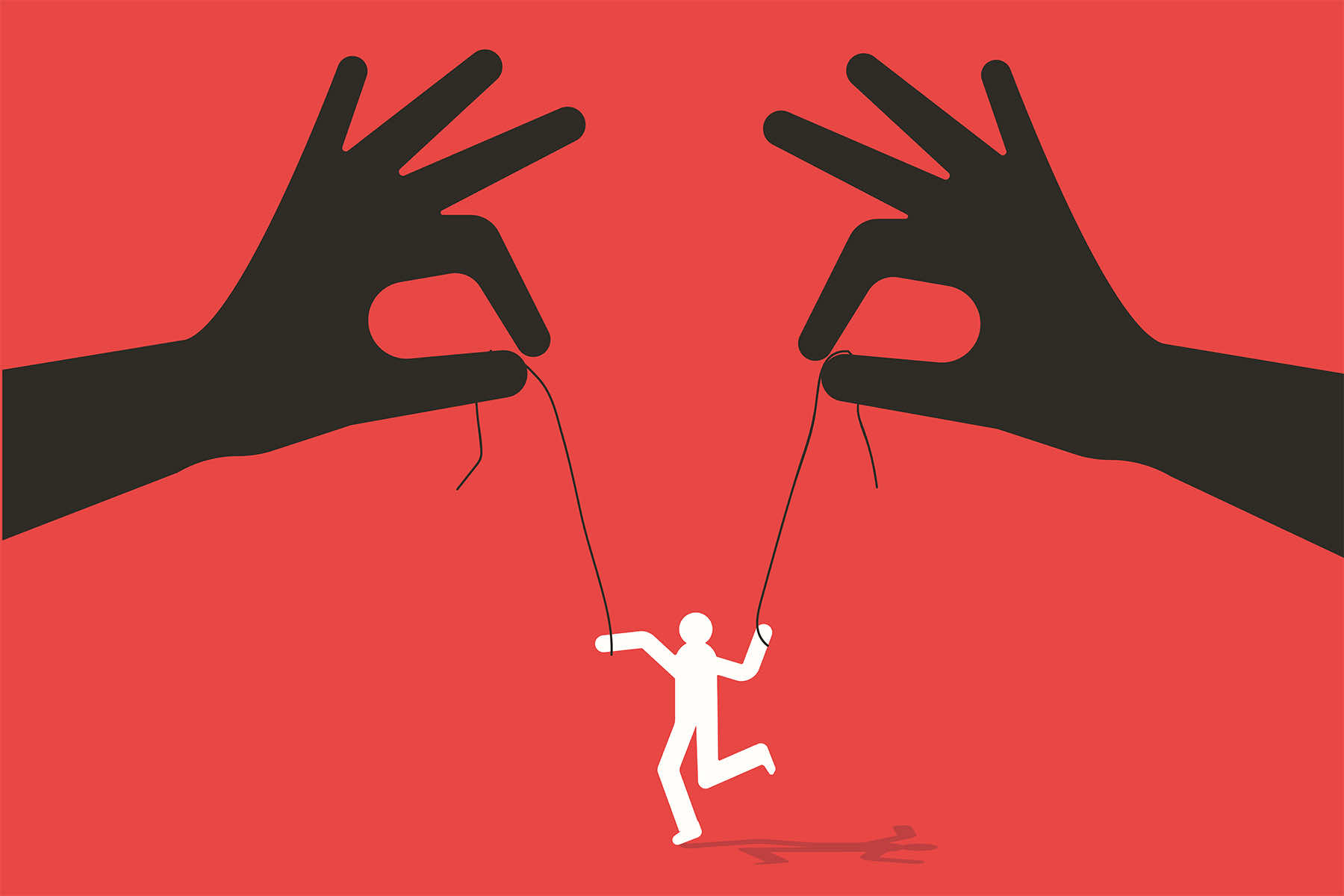
Political manipulation and permutation remain central strategies used to deceive voters just to secure sympathy votes in contemporary politics. This approach relies on misinformation, propaganda, and biased reporting, which can be employed by either the ruling party or the opposition party. The central argument is that politicians intentionally exploit divisions for their own gain.
Most of today’s political strategies were introduced before independence and during the First Republic (1960-1966). The rivalry among social media users, especially between the Yoruba and Igbo, didn’t start today; it was similar to media war in 1948, tagged “Lagos Press War” among rival newspapers, waged an aggressive war of words between the Yoruba and Igbo through the West African Pilot newspaper owned by Nnamdi Azikwe and Daily Service, the mouthpiece of the pan-Yoruba Egbe Omo Oduduwa.
The 2023 general election can’t be complete without mentioning the Obidient movement, a movement of young people with or without political affiliation. These young people gathered together to form the Obidient Movement. They pledged themselves to attack anyone or any institution that speaks against Peter Obi or their interests. Before the Obidient Movement, there was the Awo Movement, often referred to as “Awoism,” the Zik Movement, and other groups.
Another group is the Yoruba Ronu, or Yoruba conservatives, who defend the Yoruba identity. Some members are politicians or not affiliated with political parties, while others are former Obidients. Their interest was directed against any quarter that attacked the Yoruba identity. The phrase “Yoruba Ronu” translates to “Yoruba Think,” a concept introduced to the public by Hubert Ogunde in 1964 to criticise the poor leadership of Yoruba politicians.
Among the manipulating strategies used by politicians, another is the phrase “Lagos is a no man’s land,” a description coined to refer to the public space. It was first used in 1947 by Jaja Nwachukwu, an indigenous person from present-day Abia State. His motive was to create space for Nigerians to see Lagos as another home, to enjoy indigenship in Lagos. Lagos was originally “Eko”, translated to “Farm.” The place called “Eko” was changed to “Lagos” by the Portuguese, who named Eko after a town in Portugal called Lagos due to its resemblance to the lagoons and waterways surrounding it.
Another piece of misinformation is that Yoruba in the South always partner with Hausa/Fulani in the North to gain power, whereas becoming the elected leader has always been a partnership between ethnic groups in Northern and Southern Nigeria since 1960.
More so, there were several threats of succession by some Nigerians. The first effort was in 1950 at the Ibadan Constitutional Conference, where the ratio of representation was determined at “43:33:33” for the North, West, and East, respectively. Politicians in the North opposed it, where the Emir of Zaria threatened to split from Nigeria unless they received 50% of the seats. People from different ethnic groups have called for succession.
Manipulative political strategies have become ingrained in Nigerian politics and leadership, often escalating tensions and undermining ethnic harmony. The main argument is to advocate for a more inclusive and accurate political culture where disinformation and ethnic denigration are rejected, and the rule of law is respected.
A look at the present Nigerian political dynamic, political cosmopolitanism has been introduced to Nigerian politics; the current government and some members of other opposition parties have entered relationships of mutual respect despite their differences. There’s a need for opposition parties to work together to checkmate the party in power for the benefit of the citizens and the country.
As politics continue in Nigeria, there’s a need to fact-check information before disseminating it to the public; false information should be countered as early as possible. Nigerians should rely on regulated institutions and trusted individuals with track records on social media platforms to access accurate information. The National Broadcasting Commission and other media-regulated bodies should be neutral as they checkmate all media institutions, because if false information is not countered today, it will become a fact tomorrow.
 kayodeteslim